by Margaret D. Stetz
On that lovely June afternoon in 1957, did I really say to her, “Shut up, you Battle-axe”? Not likely. At age four, I’d heard the word “battle-axe,” but didn’t know its meaning. I assumed it was related to the WWII-era battleships that I saw in black-and-white movies on TV. True, she was large and frightening in her voluminous dresses and heavy lace-up shoes, but she certainly didn’t look as though she could float. Only sink.
Still, it was “Battle-axe” that she claimed I’d called her, though I’m sure that when she ordered me to get away from her roses, I simply told her to shut up. Keeping vigil every afternoon at her kitchen window, she watched for anyone who strayed onto her tiny front lawn, attracted by her plantings, so that she could shout and threaten them with a beating.
When my mother read me the tale of “The Selfish Giant,” Oscar Wilde’s religious allegory about an ogre who bars children from his garden, I thought of this neighbor. But I also knew that no merciful Christ Child, like the one in the story, would have been stupid enough at the end to lift her to Paradise.
Although she believed in the power of beatings, she was never the one who administered them. She moved too slowly to catch any child determined to outrun her. In that way, she was rather like a ship—an ocean liner in pursuit of a speedboat. She got what she wanted by complaining to parents, knowing that they would be the enforcers. The equivalent of a crime syndicate’s code of conduct guided our working-class neighborhood in New York. Any misbehavior dishonored The Family. The preferred method to wipe out the stain was use of the strap, which meant several hard smacks on the buttocks with a man’s leather belt. I’d seen fathers standing in the street, whipping off the belts that held up their pants, then chasing and cornering a little boy or girl. Mothers tended to confine themselves to rolled-up newspapers—their same method for disciplining dogs—so children were lucky if the need for punishment was considered so urgent that it couldn’t wait for a man to arrive home from work. That was the sound of spring for me: a chorus of whacks and smacks.
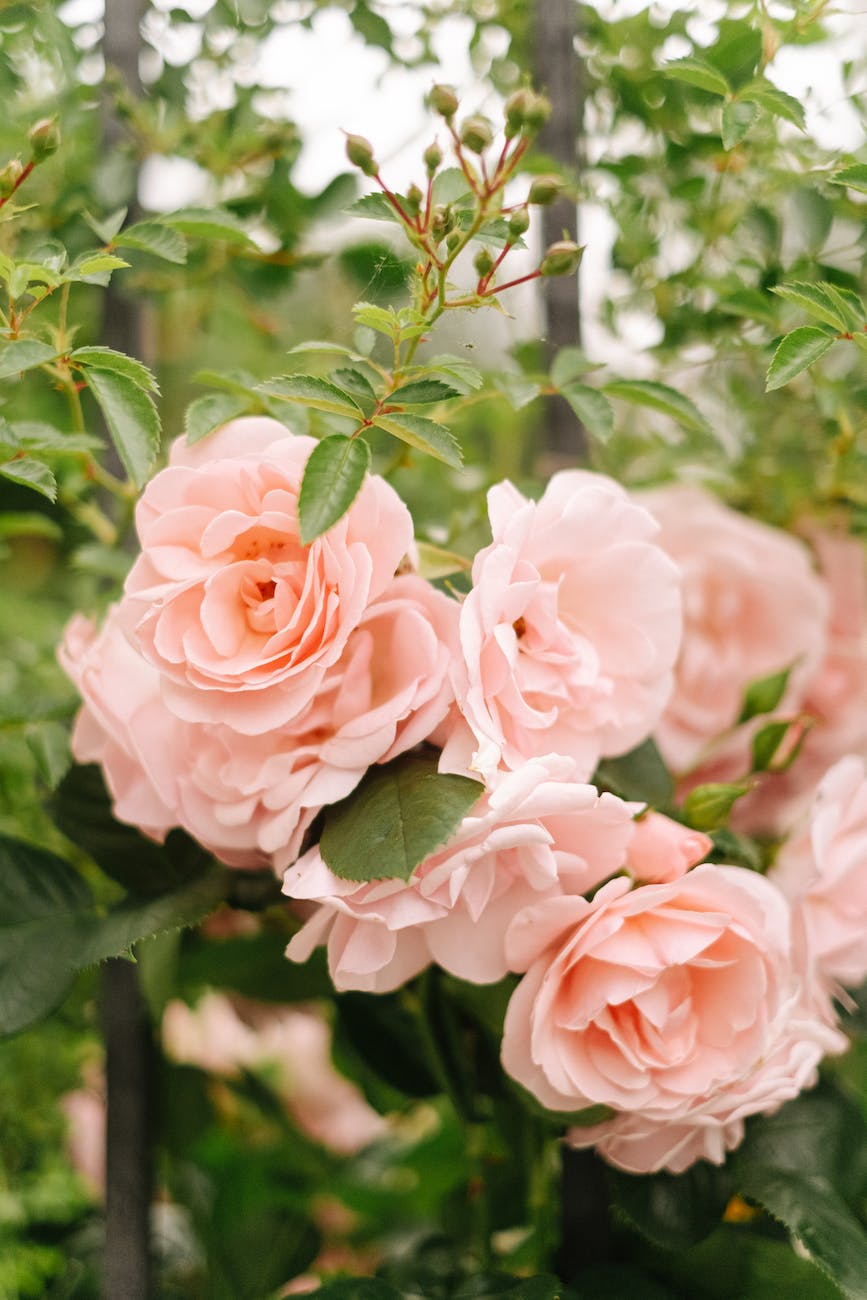
What our neighbor accused me of doing clearly fell on both the newspaper and the leather belt side of the scale—not only trespassing and endangering her roses, but then answering back and insulting an adult. It was, of course, my own fault for winding up in this predicament. Whatever else I did or didn’t say, I’d definitely told her to shut up, because I was angry, outraged, and convinced that there was nothing wrong with crossing her front yard and bringing my face close enough to those newly opening pink blossoms to sniff them.
Roses fascinated me. In fact, most flowers did. My first few years were spent on New York City’s Lower East Side in a building that had recently been a tenement, but was rehabbed to move up a notch. Now there was a bathroom inside each apartment (rather than a single one in the hallway for everybody) and even an elevator—slow, very dark, and always reeking of another tenant’s cigar smoke—to carry me up to the fifth floor in my baby carriage. Tompkins Square Park was nearby, and my mother brought me there often. It had trees and scrubby grass, but not many flowers bloomed there in spring and certainly not roses.
After my parents left Manhattan for a small, boxlike house, every penny they had went into the move and then the mortgage. No money was left over for “landscaping,” so the plants we lived with were the ones already in the ground: a scraggly forsythia bush next to the driveway and a cherry tree that blossomed not with petals, but with dark grey bags of tent caterpillars, like a massive housing project for worms. The first spring there, my mother tried growing a few flowers—mostly marigolds, which were supposed to be perennials, but died quickly—from whatever seed packets she could find at the hardware store. Roses, however, don’t come from seeds. We never had any, but that neighbor did, and they were gorgeous.
It wouldn’t have occurred to me to break one off and walk away with a stem. And though they were a luscious color, I wasn’t the least bit tempted to bite or chew on them. What harm could I do by just burying my nose in a bloom and inhaling? But there was her face right above me in the window and her voice raised, screaming, until I told her to shut up. It wasn’t the smartest response under the circumstances, but I wasn’t a politic child. I was as stubborn as she was—when frustrated, I would often bang my forehead against the nearest wall— and just as sure that I was in the right.
Of course all hell broke loose afterwards. I walked home and said nothing about this to my mother, who was surprised when our neighbor showed up at the door. She didn’t arrive immediately or alone; she waited until her husband could come along, to present an intimidating front. My mother, however, wasn’t easily intimidated, nor did she feel especially friendly anyway toward the people living around us. She already knew they looked at her with hostility, because she had a college diploma, which she’d earned by paying her way through Hunter College while working as a typist. Her degree was in foreign languages, no less. Had the neighbors also known she was Jewish, they probably wouldn’t have spoken to her at all, and my father might not have been allowed to buy our house, but my parents wisely concealed their “mixed” marriage.
I can’t recall whether my mother apologized on my behalf. She probably did, to get them to leave, but I don’t remember her looking shocked or upset. And she must have assured them that she would inform my father, who would of course inflict the usual sort of punishment for such a crime.
What did happen afterwards? Nothing much. When my father heard that I’d talked back to a neighbor, he asked which one. My mother told him, “The one who hates children.” “Oh,” he said, smiling at me, on his way out the door, “That Bag.” Not only didn’t I get a beating, but I had been given a wonderful new phrase to puzzle over. That Bag. That Bag—I would repeat and then ask myself, again and again—That Bag of what…?
 Little Old Lady Comedy